Build Your Expertise in Team Science
Whether you’re getting accredited, exploring our research or accessing practitioner resources, here is everything you need to grow your team development expertise.
Join 24,000+ practitioners in 190 countries who trust TMS Global as their foundation for evidence-based team development.


Recent Research Papers and Resources
TMS Global maintains one of the world’s largest team effectiveness research databases, spanning 40+ years and 683,000+ responses across 190 countries.
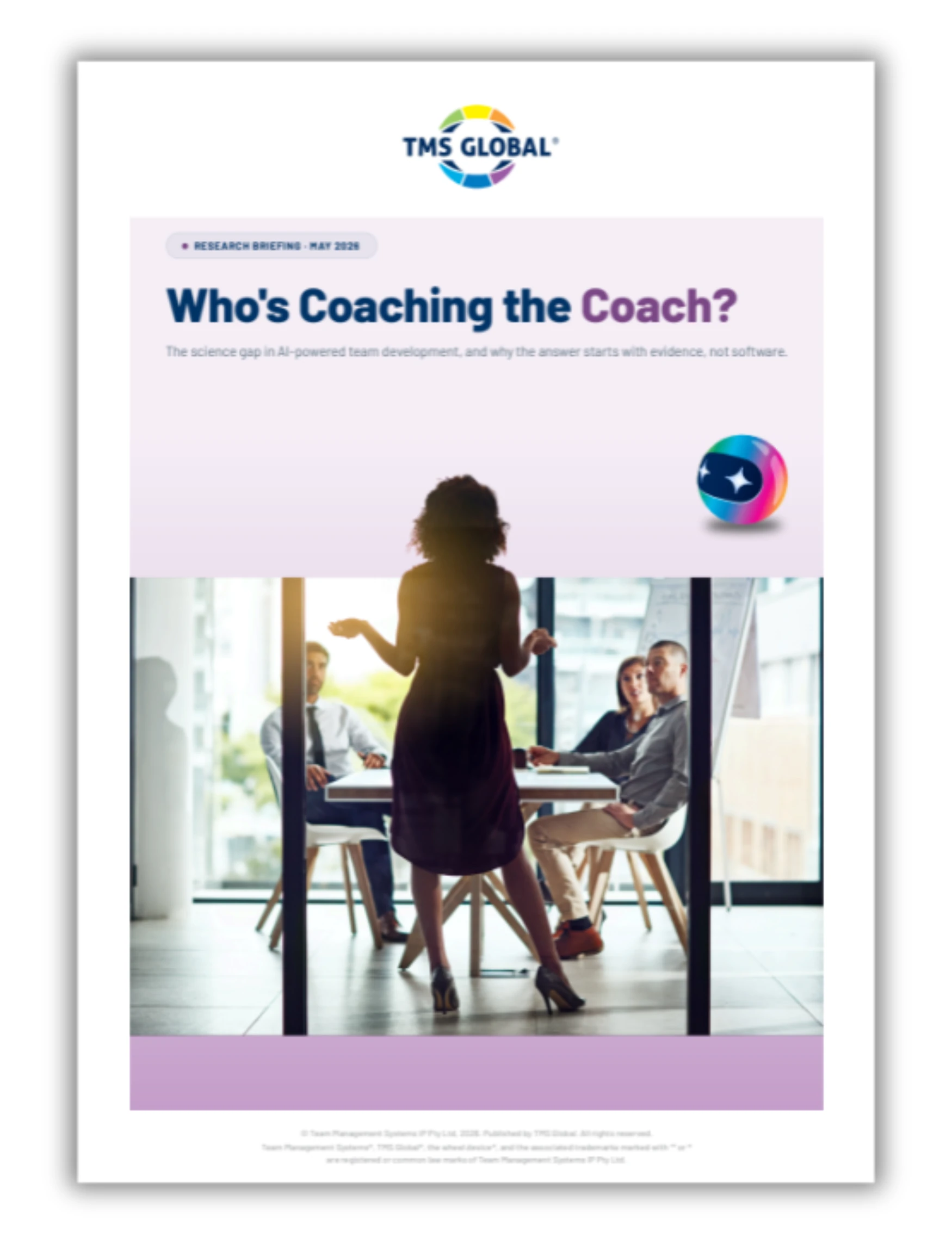
Who’s Coaching the Coach?
Most AI coaching platforms draw on general-purpose models untethered from validated people science. This briefing examines what effective AI coaching requires and the evidence you need before you choose.
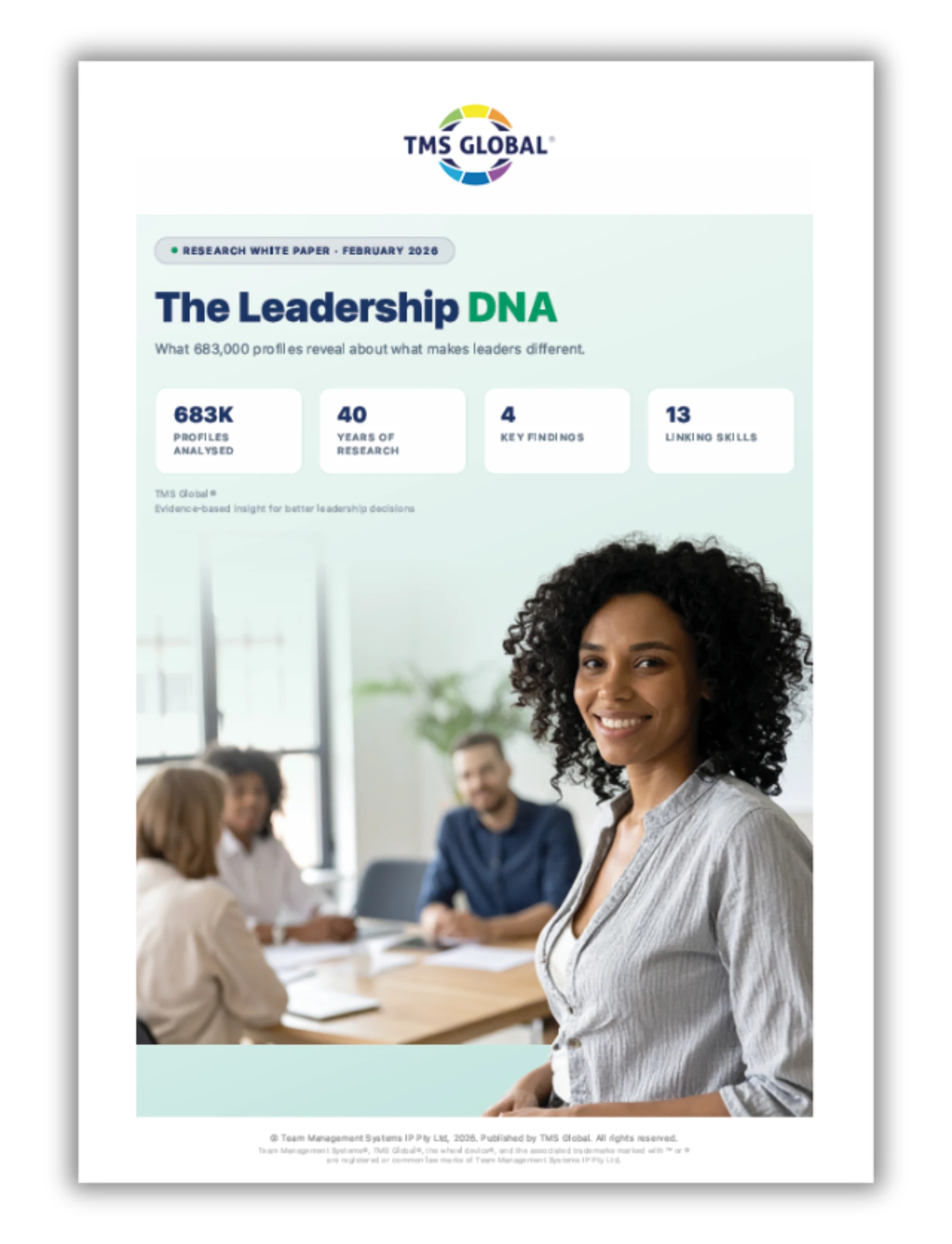
Leadership DNA
By comparing psychometric data across organisational levels, we have identified five distinctive characteristics common to leaders.
But identifying leadership potential is only half the work. Developing their capabilities is the other half.
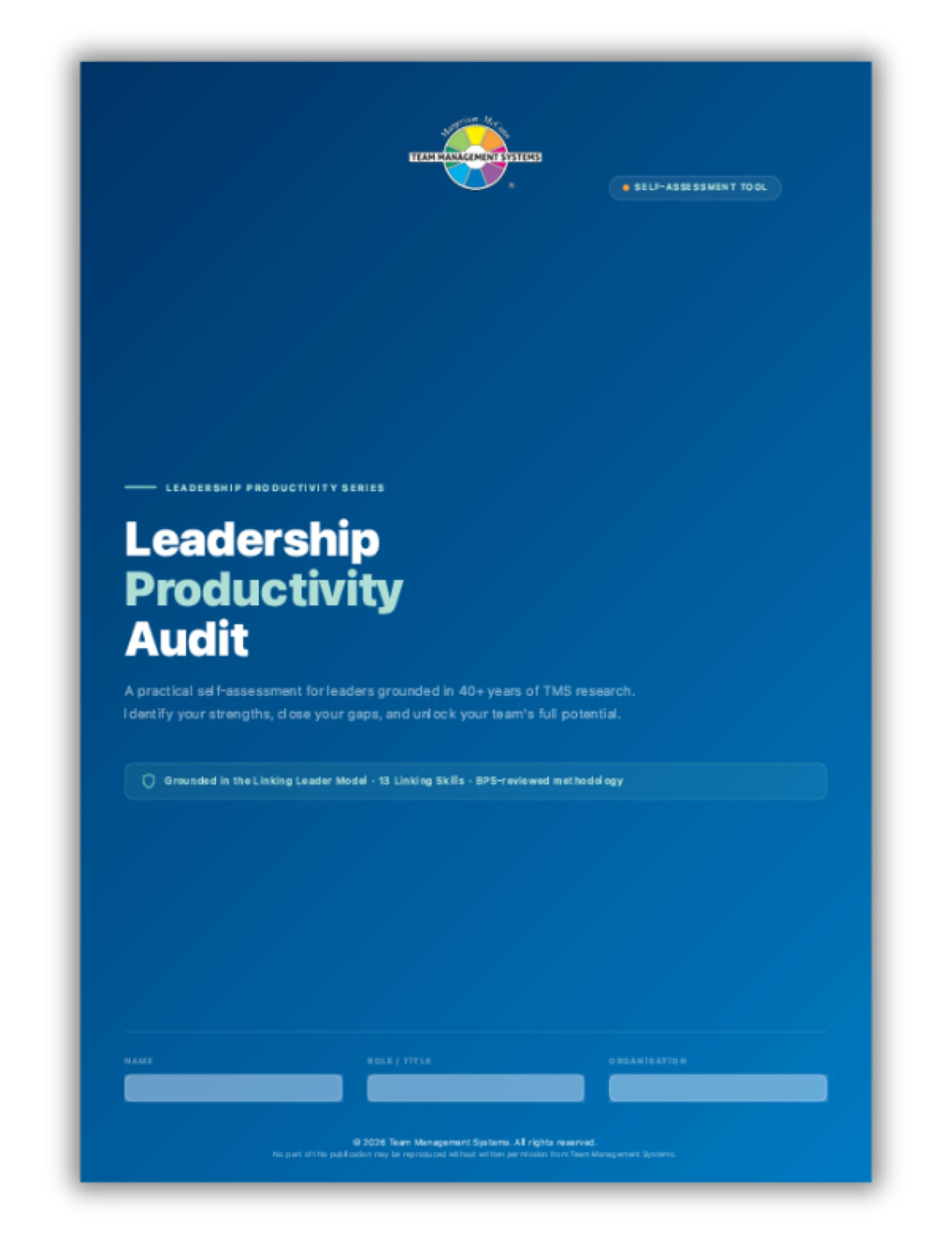
Leadership Productivity Audit
Get a free 10-minute self-assessment that rates your leadership across four dimensions: engagement, psychological safety, collaboration and performance with a scored result and action planning template.
Featured Resources
Free eBooks
The Language of Teamwork
Complete guide to the TMP framework: 8 Team Roles, work dimensions, and practical application strategies.
High-Energy Teams
Framework for building and sustaining high-performing teams based on 40 years of research.
Linking Leadership
How great leaders connect individual performance to team success and organisational goals.
QO2 Opportunities-Obstacles
One quotient that predicts how people, leaders and teams approach risk, change and adversity at work.
Featured Article

Harnessing Diverse Thinking to Speed Delivery
When teams move fast, diverse thinking is often the first casualty. This article explores how leaders can harness — rather than suppress — different work preferences to accelerate delivery without losing quality or burning out the team.
Frequently Asked Questions
How do I get started with TMS?
If you’re a coach or consultant in team and leadership development, start with accreditation. If you’re an organisation seeking team development, find a practitioner or contact us to discuss your needs. If you’re curious about the research, explore our papers and resources.
Do I need to be accredited to access TMS Global resources?
Some resources are public (free eBooks, articles, research summaries). Others are practitioner-only (facilitation guides, session designs, detailed research data). Accreditation gives you full access.
How long does it take to become accredited?
Training duration varies by product (1–3 days per product). You can get accredited in multiple products over time.
Is there ongoing professional development after accreditation?
Yes. TMS Global offers continuous learning through webinars and workshops. Participation is optional but encouraged.
Can I access research data for academic studies?
Yes. TMS Global collaborates with researchers and academics. Contact us to discuss data access, collaboration opportunities and academic partnerships.
What’s the difference between a Practitioner and an Associate?
Practitioners are accredited to deliver TMS Global products to their clients or organisations. Associates are select, high-performing practitioners who represent TMS globally, appear on our website, deliver public workshops and receive direct referrals from TMS.
How do I connect with other practitioners?
Join the private LinkedIn group (access provided upon accreditation) and participate in webinars and forums. The community is active and supportive.
Can I deliver TMS Global products without getting accredited?
No. TMS Global products are proprietary and require accreditation to administer, debrief and facilitate. This ensures quality, protects the integrity of the methodology, and maintains ethical standards.