
What separates high performing teams from regular teams?
High-energy teams do not happen by chance. They are built through deliberate focus on eight questions that, taken together, drive alignment, focus and adaptability: Who are we, Where are we now, Where are we going, How will we get there, What is expected of us, What support do we need, How effective are we, and What recognition do we get? The High-Energy Teams Model gives HR and L&D leaders a structured way to integrate these questions into team development work, and gives consultants a complete framework that pulls together the Team Management Wheel, the Window on Work Values, the QO2 Profile and the Linking Leader Model into one team intervention.
- Diagnose your team against the eight strategic questions of the model.
- Build a Team Purpose Statement, ground rules and SMART goals that hold up under pressure.
- Embed continuous review, recognition and Linking Skills into how the team operates.
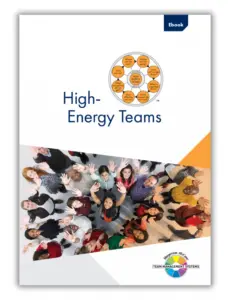
Download the High-Energy Teams ebook.
High Energy Teams ebook
Your practical framework for teams that need to perform, adapt and sustain high energy.
What’s inside the ebook
- The High-Energy Teams Model and its eight strategic questions.
- The Workplace Behaviour Pyramid showing how Preferences, Risk-Orientation and Values drive team behaviour.
- The Team Management Wheel and the eight role preferences with brief descriptions of each.
- The QO2 Risk-Orientation Model and how to read individual and team QO2 scores.
- The Window on Work Values Model and its role in shared values and ground rules.
- Tuckman’s four stages of team development with a health-check thermometer for teams to self-assess.
- A SWOT and PESTLE framework for situational analysis at team level.
- A Team Purpose Statement template covering What, Who, How, Outputs and Outcomes, with a worked example from a manufacturing team.
- SMART team goals and SMART individual goals with reflection questions for each.
- The Types of Work Wheel and the nine critical work functions teams must cover.
- A Personal Learning Action Plan framework for individual development.
- Five ways to give recognition: Feedback, Celebrations, Remuneration, Fringe benefits, Promotion.
- The Linking Leader Model and the role of Linking Skills in team performance.
Why this matters for HR and L&D leaders
Most team development efforts fail not because the content is wrong but because the framework is partial.
The High-Energy Teams Model gives HR and L&D leaders a single, integrated structure that connects diagnosis (Who are we, Where are we now), direction (Where are we going, How will we get there), execution (What is expected of us, What support do we need) and sustainment (How effective are we, What recognition do we get). It maps directly to TMS profile tools so the work compounds across teams and stays consistent across cohorts. It is also designed to scale from project teams to leadership teams to organisation-wide rollouts.
Why this matters for consultants and facilitators
The High-Energy Teams Model gives you a complete intervention framework.
Each of the eight questions opens a natural session focus and each maps to specific TMS instruments. The Team Purpose Statement template, the SMART goals process, the Types of Work Wheel and the Linking Skills overlay give you a structured day-by-day path through a team development engagement, anchored in research and supported by the wider TMS toolkit (TMP, QO2, WoWV, LLP|360, My Team Diagnostic Tool and TMP Curiosity Cards).
Who this ebook is for
- HR and L&D leaders designing or refreshing team development, leadership or onboarding programs.
- Team leaders running new, project, cross-functional or leadership teams.
- Consultants and facilitators running team effectiveness, alignment or transformation engagements.
- Leaders building organisation-wide capability around teams.